Since the first decade of the 2000s, Nick Brandt has been focusing his artistic practice on
portraying scenes witnessing the disappearing natural world, and gradually focusing more and
more on the destructive impact of human activities on the most vulnerable beings, both people
and animals. And he has consistently been doing it with elegance and beauty. A kind of beauty
that punches you in the stomach; that pulls you in with aesthetic virtuosity but hides nothing of
the dramatic reality.
In 2020, in full pandemic times, he began his long term series The Day May Break, recalibrating
his attention on people, animals, and nature, affected by environmental destruction in parts of
the world which are among the least responsible for the climate breakdown that is destroying
natural and human ecosystems.
For the first time, at Gallerie d’Italia Torino, the four chapters of The Day May Break are shown
together, immersing us all in a harsh yet poetic view of what is left, for now, that can still offer
hope.
Nick Brandt works tirelessly and precisely. All the chapters implied months of preparation and
planning, and weeks of shooting on his medium format camera, always in collaboration with a
local crew that deeply understands the people, the culture and the territory. The scenes are set,
the concept is clear. The atmosphere and light created at the shoot are the results of carefully
waiting for the perfect moment and executing to plan, while inevitably responding to nature’s not
always predictable effects. More weeks follow back home with accurate printing and scrupulous
selection of images. There are no shortcuts, Nick does not allow himself that. He wants to speak
directly to your heart and mind, and does so with a silent but piercing cry that breaks through the
images and reaches the viewer. The images are there to be seen. The stories are there to be
read and understood. Everyone has a name, no one is just a figure. They are all, humans and
animals, bearers of that muted cry that must be listened to.
The Day May Break is a four-part global series portraying people and animals that have been
impacted by climate change, environmental degradation and destruction.
Chapter One is photographed in animal sanctuaries in Kenya and Zimbabwe in 2021 where
animals, saved from habitat destruction to the collateral effects of poaching, are taken care of
and find a new living environment, forever unable to return to the wild. The people portrayed
have been severely affected by climate change, some displaced by harsh cyclones that
destroyed their homes, others such as farmers impoverished by years-long droughts who have
been unable to maintain their livelihood and thus had to abandon their lands: they are an
example of resistance and survival. All animals, accustomed to their human carers in the
sanctuaries, are shot in the same frame as the local people creating an almost surreal scene, in
which human and animal, affected by the all too real man made environmental degradation,
stand side by side in a dignified pose of survival, linked by a shared send of loss.
Chapter Two, in a similar vein on another continent in 2022, showcases the equally sentient
and resilient species side by side. The animals are rescued and protected in an animal
sanctuary within a largely biodiverse country, such as Bolivia, now continuously threatened by
man-caused climate breakdown, and frequently strained by floods, droughts and wildfires. The
people, once again, have been dramatically impacted by climate change, from extreme droughts
to floods that have destroyed their homes and livelihoods. And like in the first chapter, they are
photographed together, in the same frame, at the same time. There is no fear, but a common
destiny where resignation is fought with dignity.
Chapter Three, SINK / RISE, takes us around the world in the distant archipelago of Fiji islands
in 2023. While in the previous two chapters the people portrayed have already been directly
affected by climate breakdown, in this case the Fijian protagonists in the images are
representatives of what will happen in the coming decades due to the alarming pace of sea level
rise, as a result of climate change. The focus is on humans and their lives, which will inevitably
change dramatically. The work is a carefully planned photo set on a shallow ocean floor where
the people act out ordinary daily poses, individually or in small groups, all underwater. There is
beauty in the surrounding natural environment, albeit in reality it is also the result of shattered
coral reefs destroyed by climate change-intensified cyclone; a sense of awe takes over at first
but there is a muted cry in each scene, there is tension, because the future is not far and it
means losing everything.
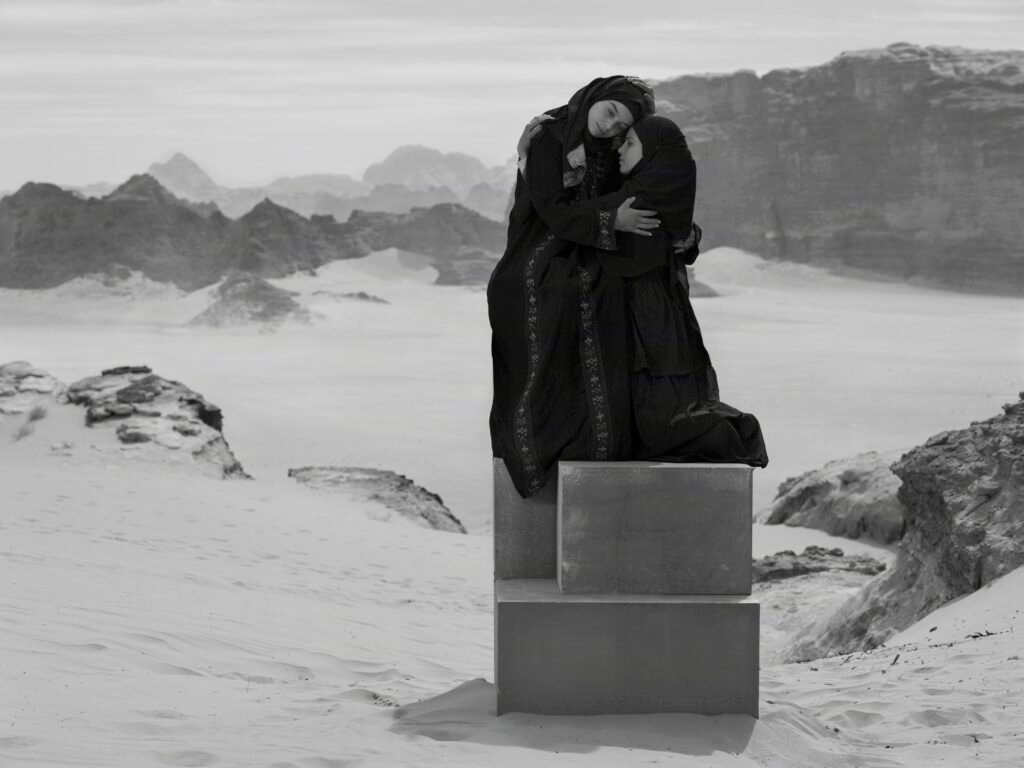
Chapter Four, The Echo of Our Voices, is the last of the series, shot on another continent in
2024. This work portrays Syrian refugee families in Jordan, adding conflict and forced migration
to the list of dramatic issues impacting the most vulnerable people on this planet. Already
affected and displaced due to a decades long war, they are photographed in a desert area of
their host country, which stands as a visual symbol of the extreme water scarcity in this part of
the world due, once again to climate change. The people stand tall and together in a resilient
collective attitude, wearing their dignity and pride as an emblem of hope and survival. The focus
is on their shared strength and the unbeatable desire for a better future.